FACTSPACE WEST AFRICA – WEBSITE REDESIGN
A credible home for West Africa's fact-checkers, with every verdict showing its working.
View prototype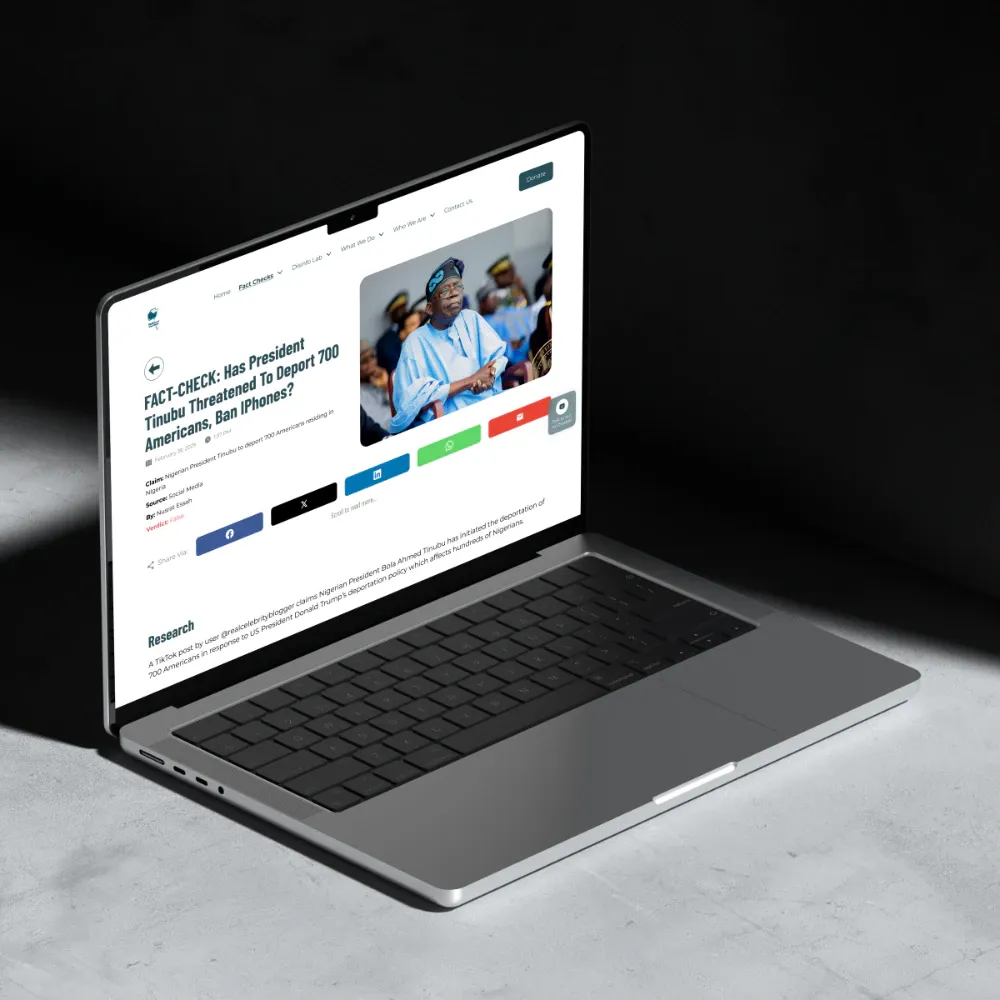
BACKGROUND & CONTEXT
- FactSpace is an independent, non-partisan fact-checking organisation and IFCN signatory working across West Africa.
- Its work spans several countries, but the old site didn't make it easy to find a country's fact-checks, or to see how a verdict was reached.
- For a fact-checker, credibility is the product: sources, method and independence need to be visible, not buried in an About page.
TARGET USERS
Readers: checking a claim they saw on social media, deciding whether to trust the verdict
Journalists and partners: looking for country coverage and method, deciding whether to cite or collaborate
Funders: checking independence and impact, deciding whether to support
THE GOAL
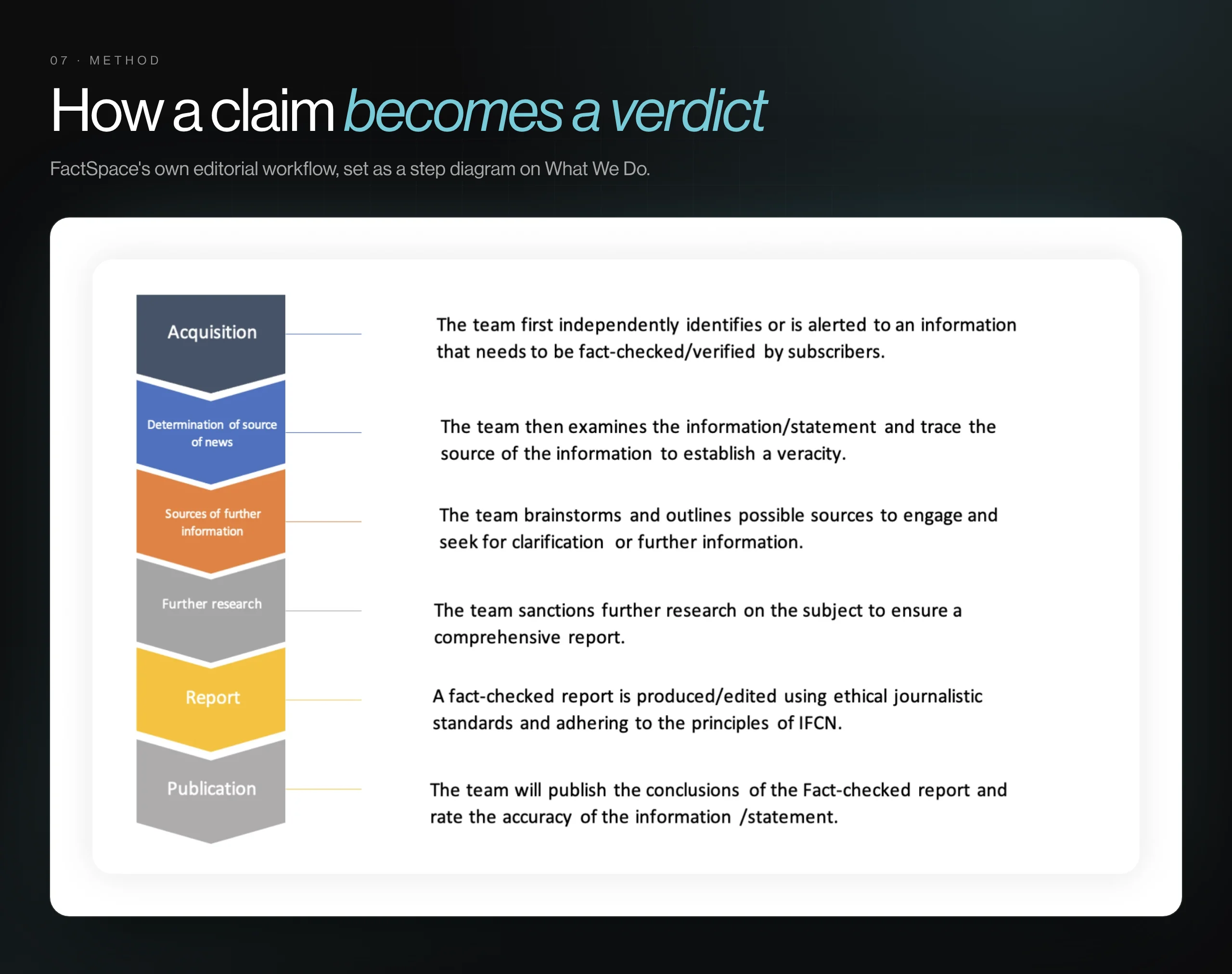
Make FactSpace read as an institution: find a fact-check by country in two clicks, see how every verdict was reached, and see who stands behind it.
MY PROCESS
- Content audit
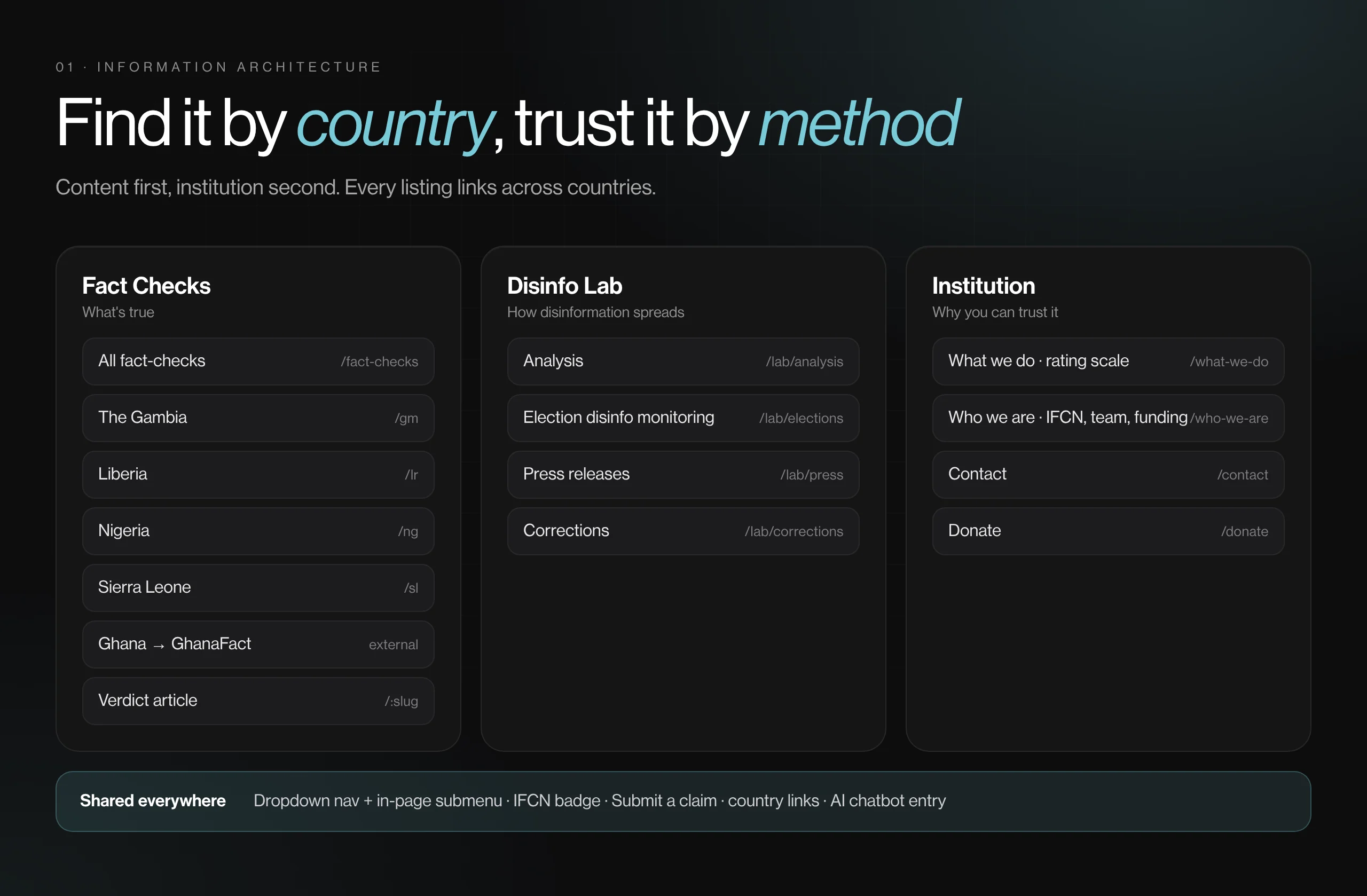
- Information architecture
- Wireframes
- UI
- Prototype
KEY DECISIONS
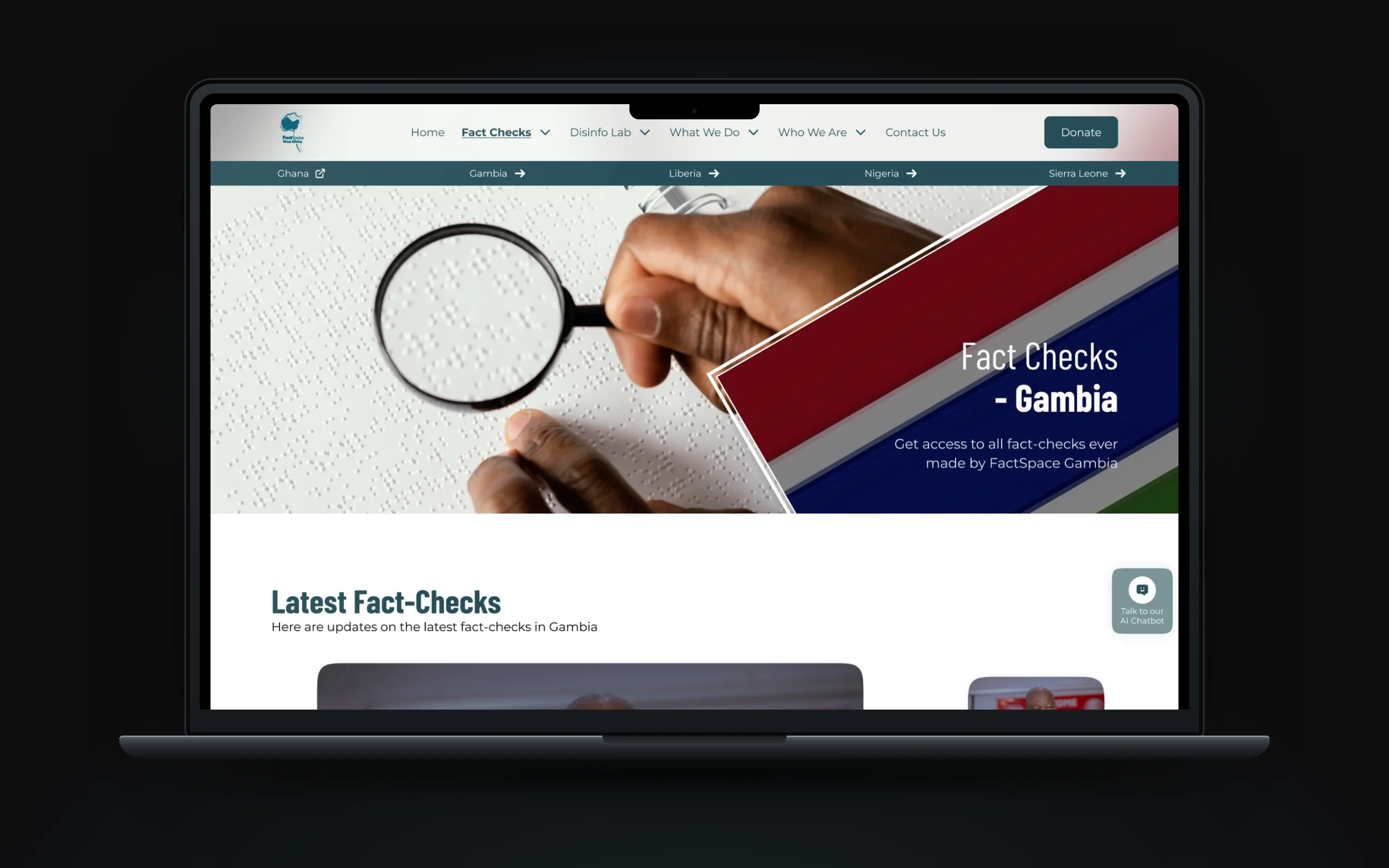
- Fact-checks by country, not only by date: a flag strip on every listing, and a page per country
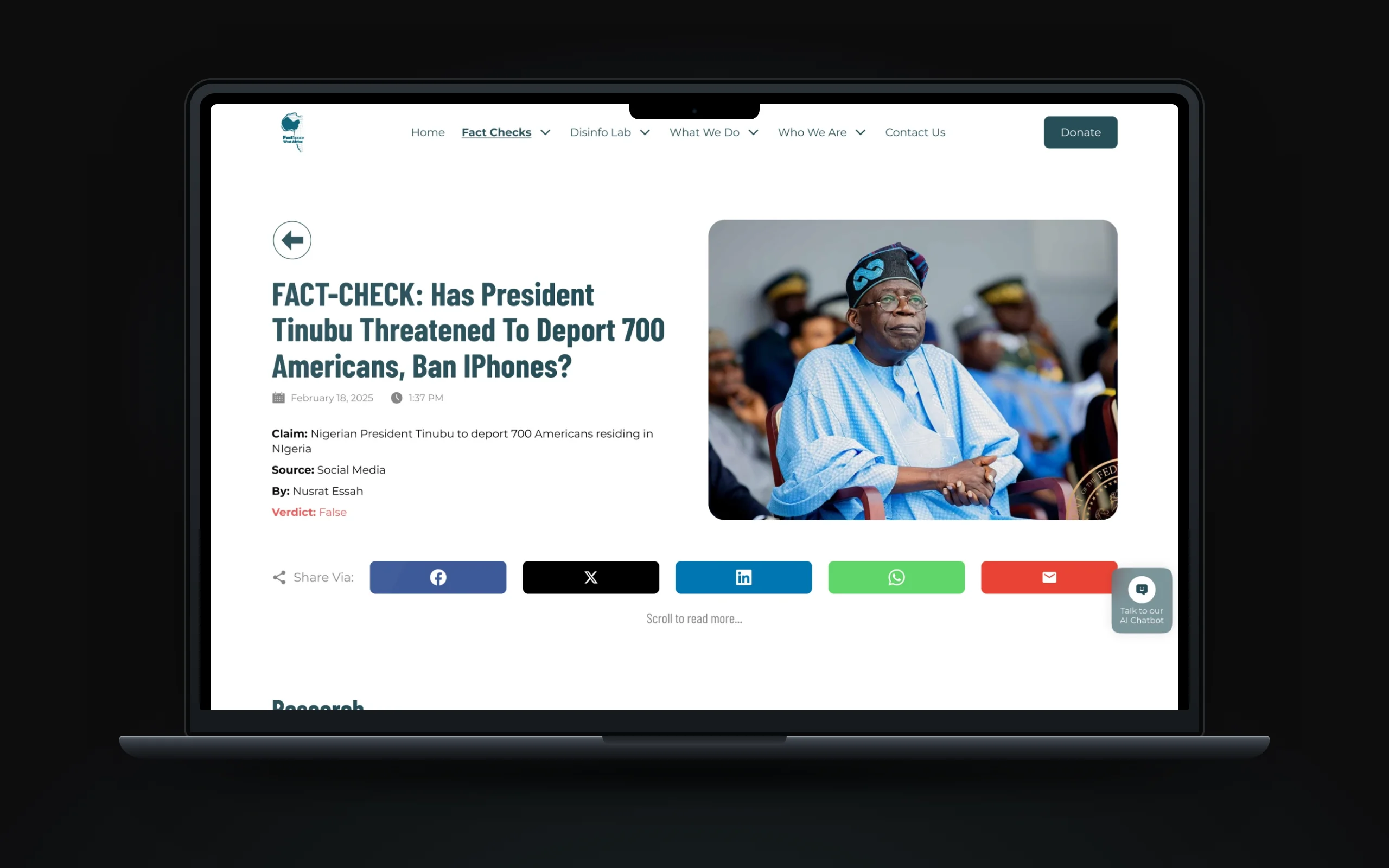
- One article template for every check: Claim, Source, By and Verdict above the fold, then Research, Fact Check and Verdict
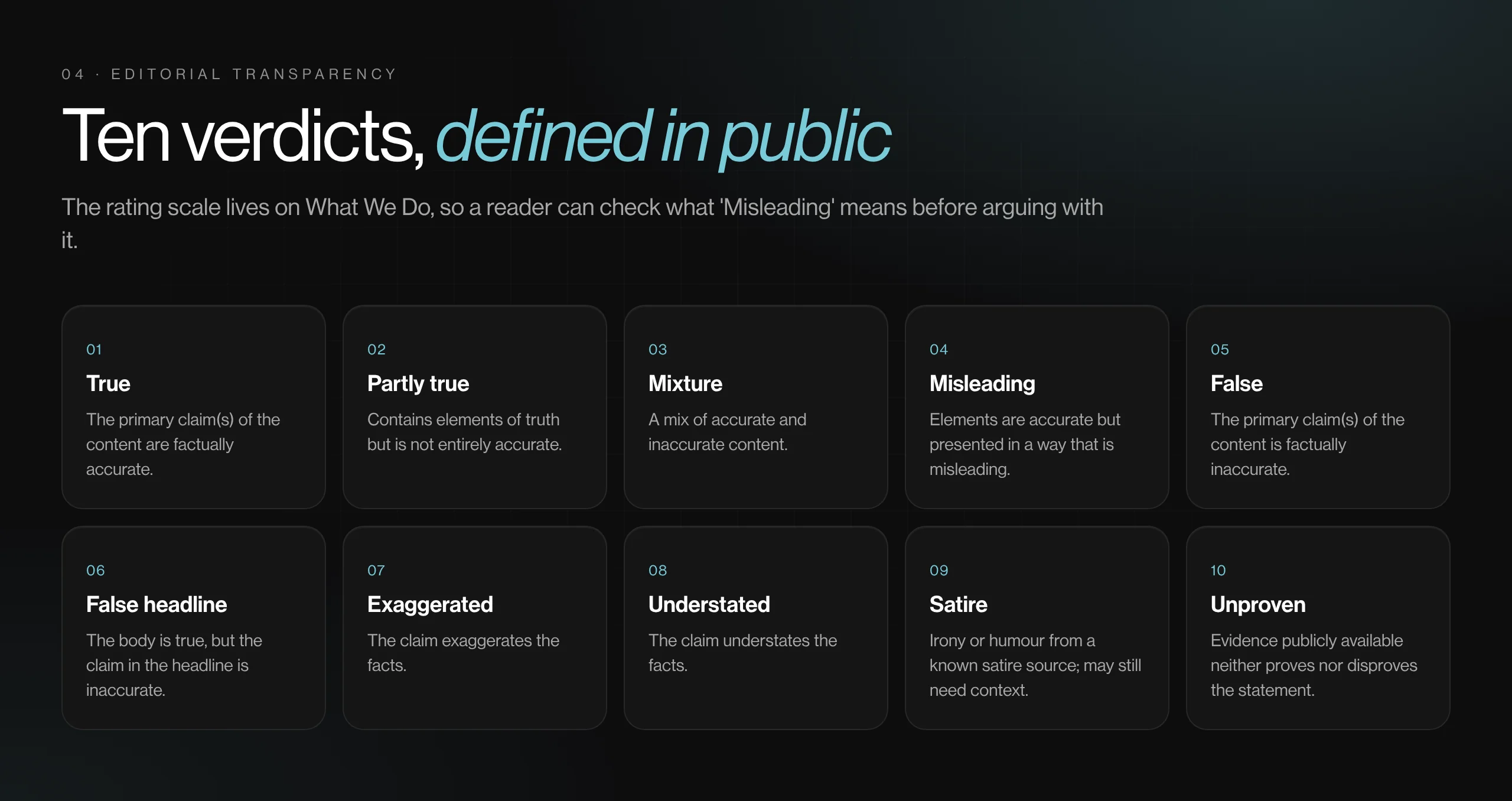
- Publish the rating scale: ten verdict labels, each with a one-line definition
- Ghana links out to the existing GhanaFact site instead of duplicating it
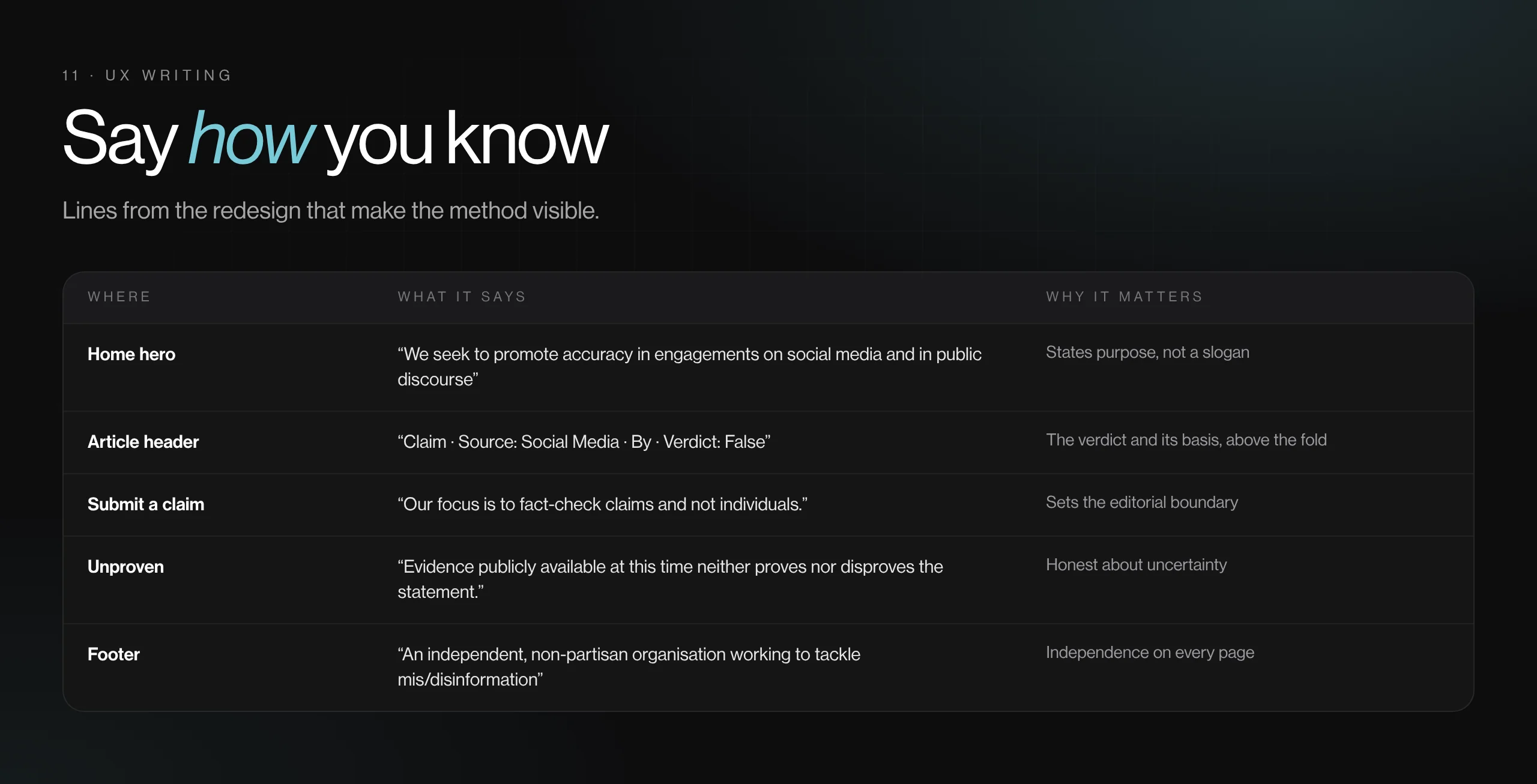
- Trust signals on every page: the IFCN badge, a Submit-a-Claim form and the editorial-independence statement
THE SOLUTION
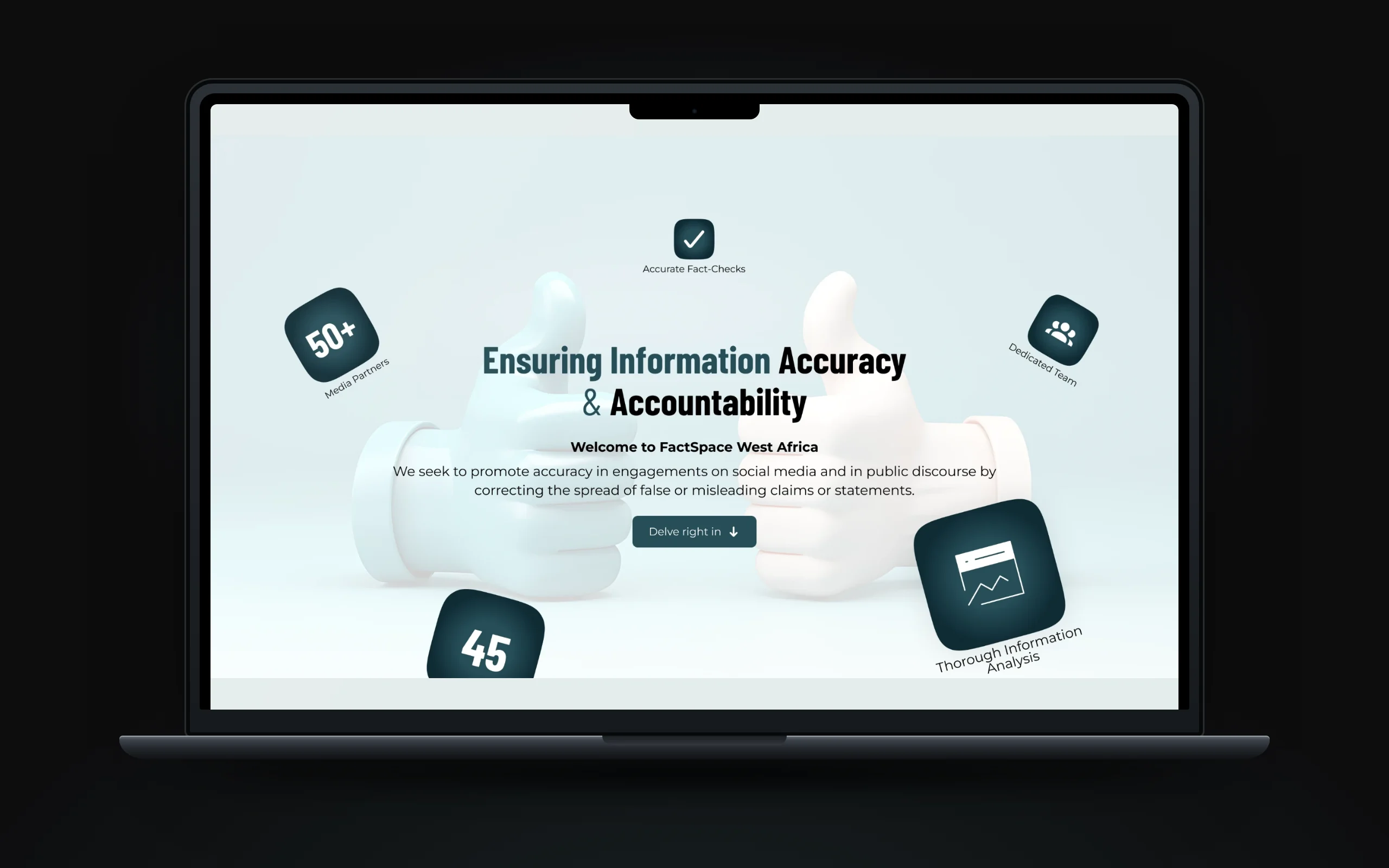
- Home: a clear promise ('Ensuring Information Accuracy & Accountability'), latest fact-checks, country entry points, press releases and partners.
- Fact Checks: a hub with filters and 'Load more', plus pages for The Gambia, Liberia, Nigeria and Sierra Leone.
- Verdict article: the claim and verdict up front, the research trail below, attached media, sharing and previous/next.
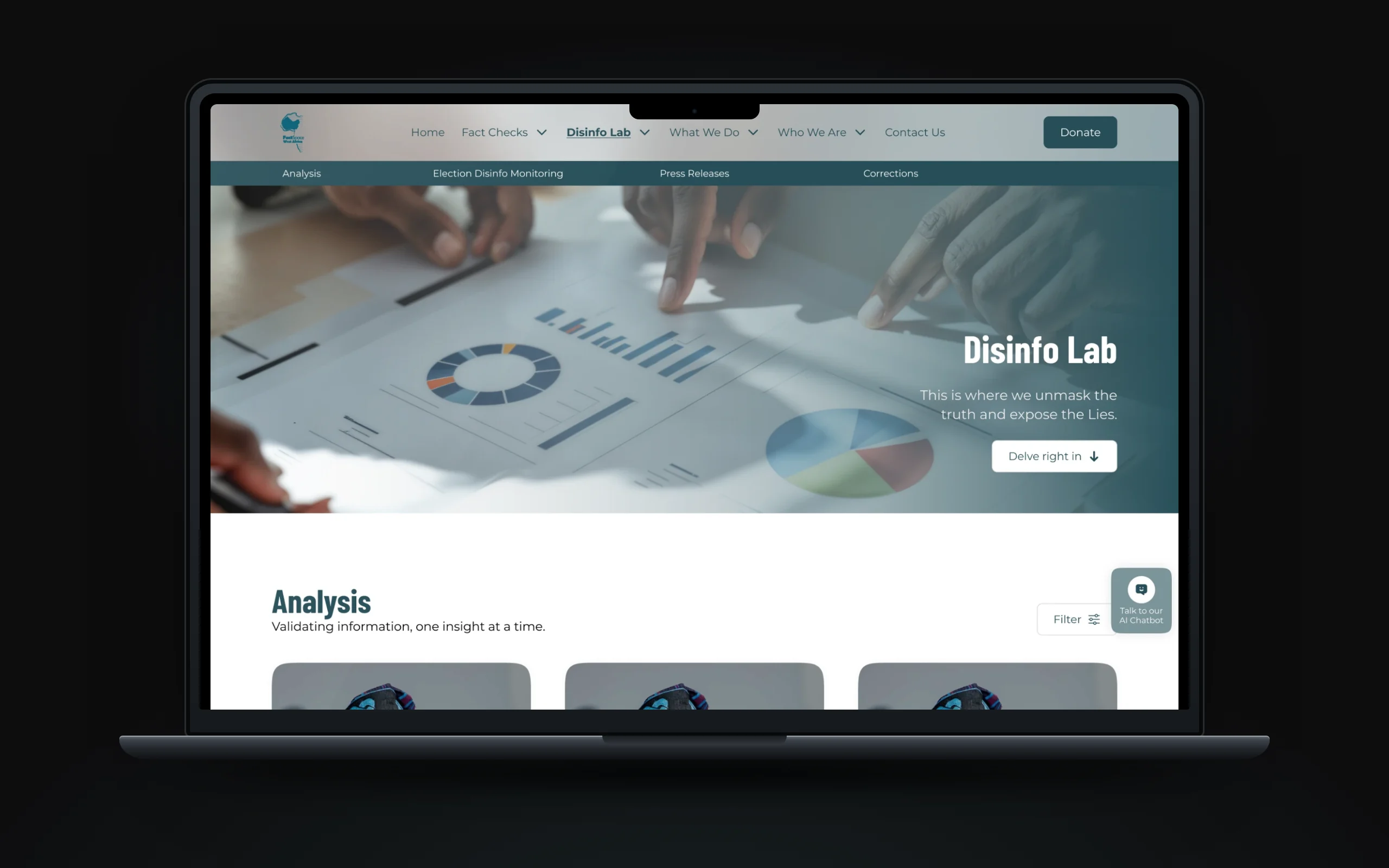
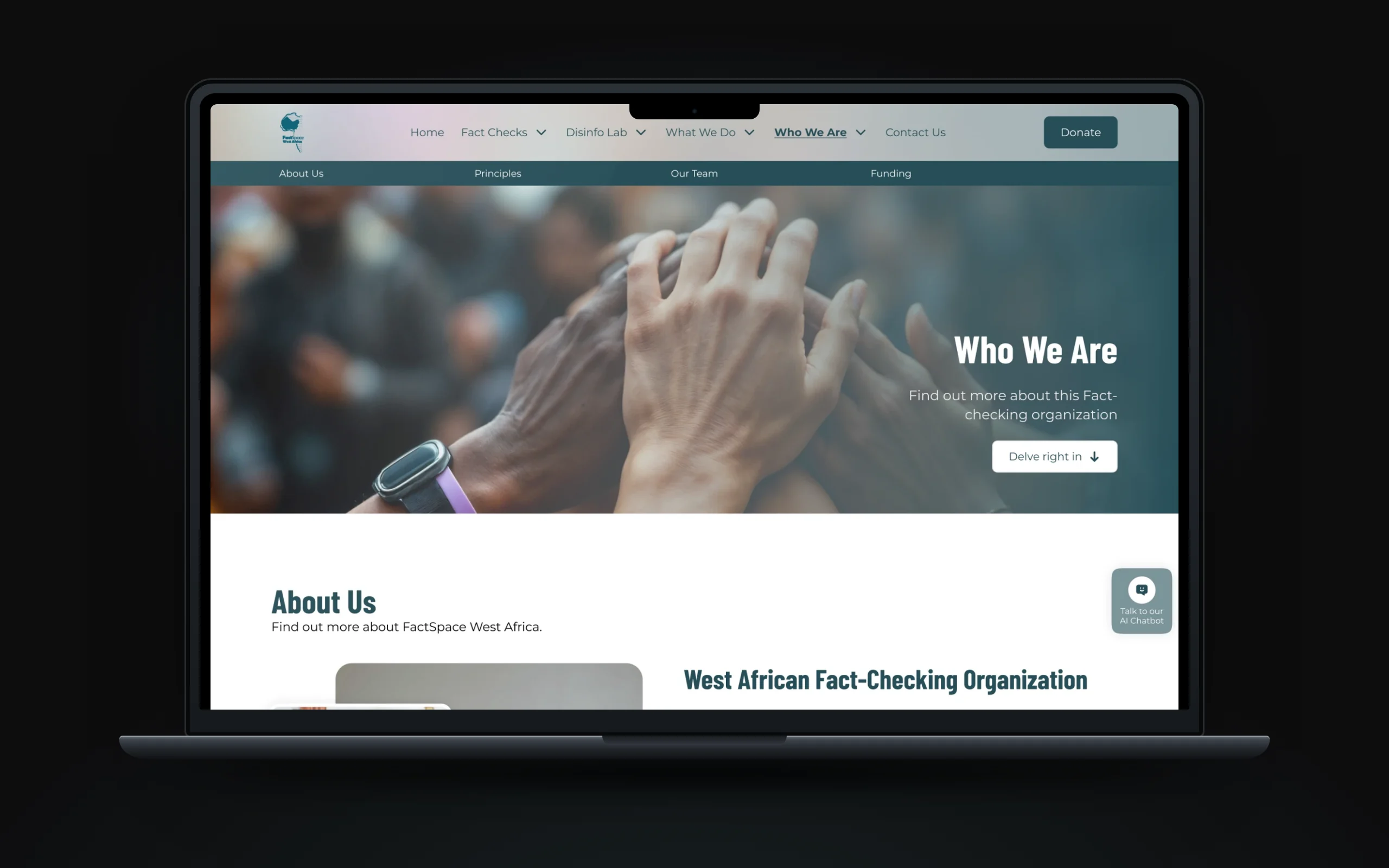
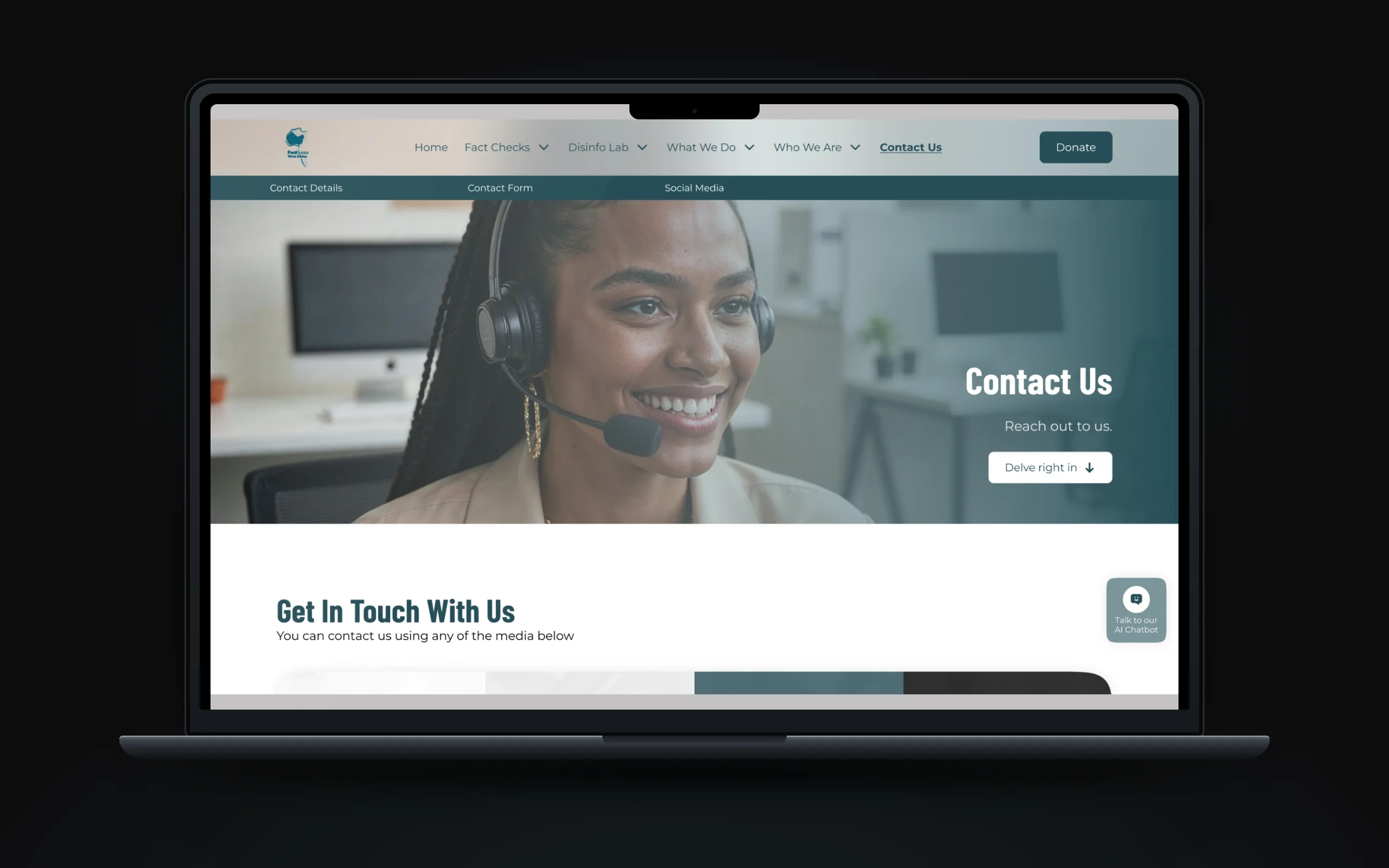
- Institution pages: Disinfo Lab (analysis, election monitoring, corrections), What We Do with the rating scale, Who We Are with IFCN principles, team and funding, plus Contact and Donate.
KEY FEATURES
- Country-based fact-checks
- Claim → verdict article template
- Published rating scale
- Disinfo Lab & election monitoring
- Submit-a-claim form
- IFCN, team & funding pages
DESIGN SYSTEM & ACCESSIBILITY
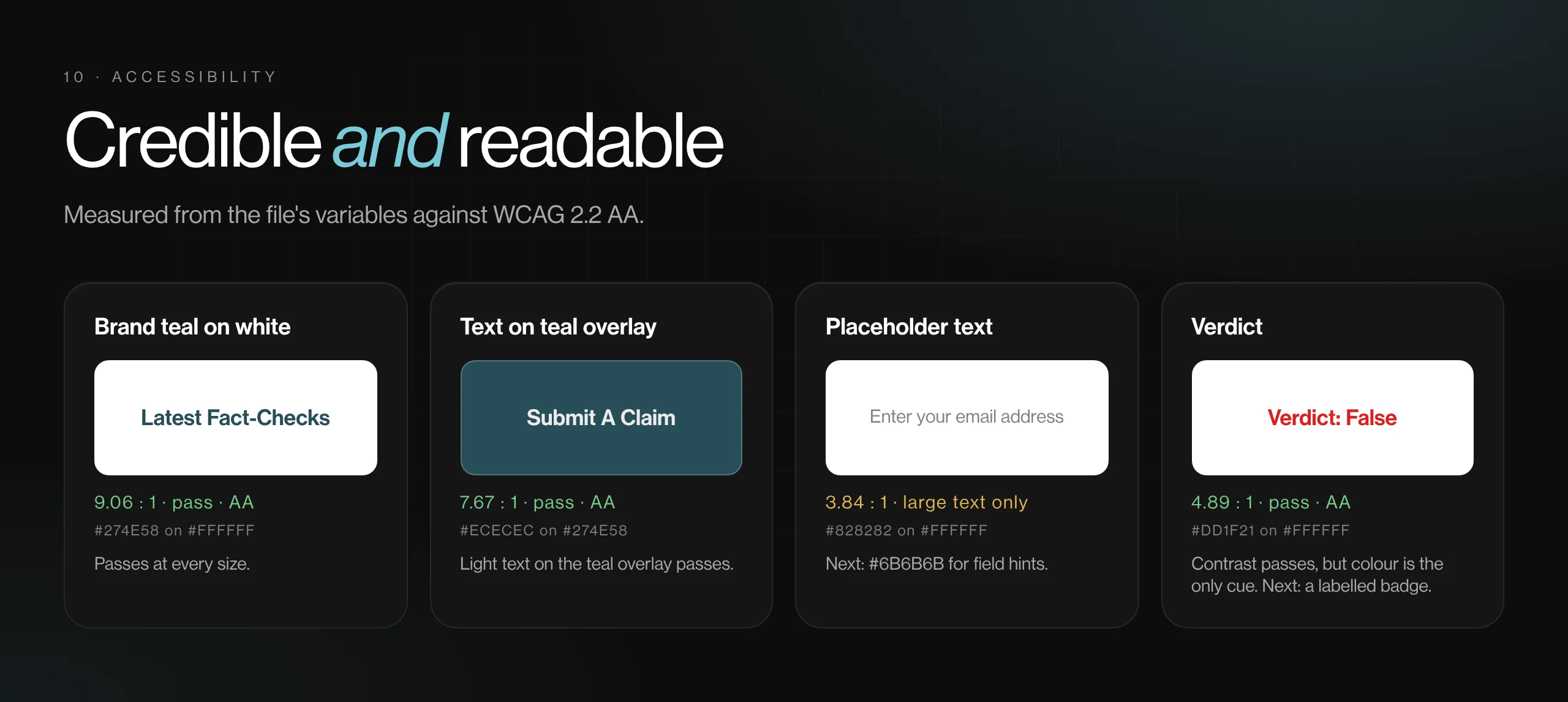
- Editorial type pairing: Barlow Condensed for headlines, Montserrat for reading; one teal (#274E58) carries the brand.
- A fixed article hierarchy so every verdict reads the same way, whoever wrote it.
- Next round: show verdicts as a labelled badge with an icon, not red text alone, and darken placeholder grey #828282 (3.9:1).
View gallery (11 images)Hide gallery
 (opens full size in a new tab)
 (opens full size in a new tab)
 (opens full size in a new tab)
 (opens full size in a new tab)
 (opens full size in a new tab)
 (opens full size in a new tab)
 (opens full size in a new tab)
 (opens full size in a new tab)
 (opens full size in a new tab)
 (opens full size in a new tab)
 (opens full size in a new tab)
BY THE NUMBERS
- Countries covered (Ghana via GhanaFact)
- 5
- Article template: claim, research, verdict
- 1
- Credibility shown on every page
- IFCN
OUTCOME
- A site that reads as an institution rather than a blog, with method and independence built into the page structure.
- Readers can reach any country's fact-checks from any listing, and every article shows its working.
- Supporters get a direct route to give, and readers a direct route to submit a claim.
What I learned
For a fact-checking brand, showing your sources is the design.